Kemal Karagöz
Electrical and Electronics Engineer | Technical Solutions & Product Management | Telecommunications & Industrial Digitalization
Berlin, Germany
I enjoy understanding complex systems, bringing together knowledge from different fields to develop solutions, and explaining how those solutions work. I have experience in telecommunications and industrial digitalization.
Selected work
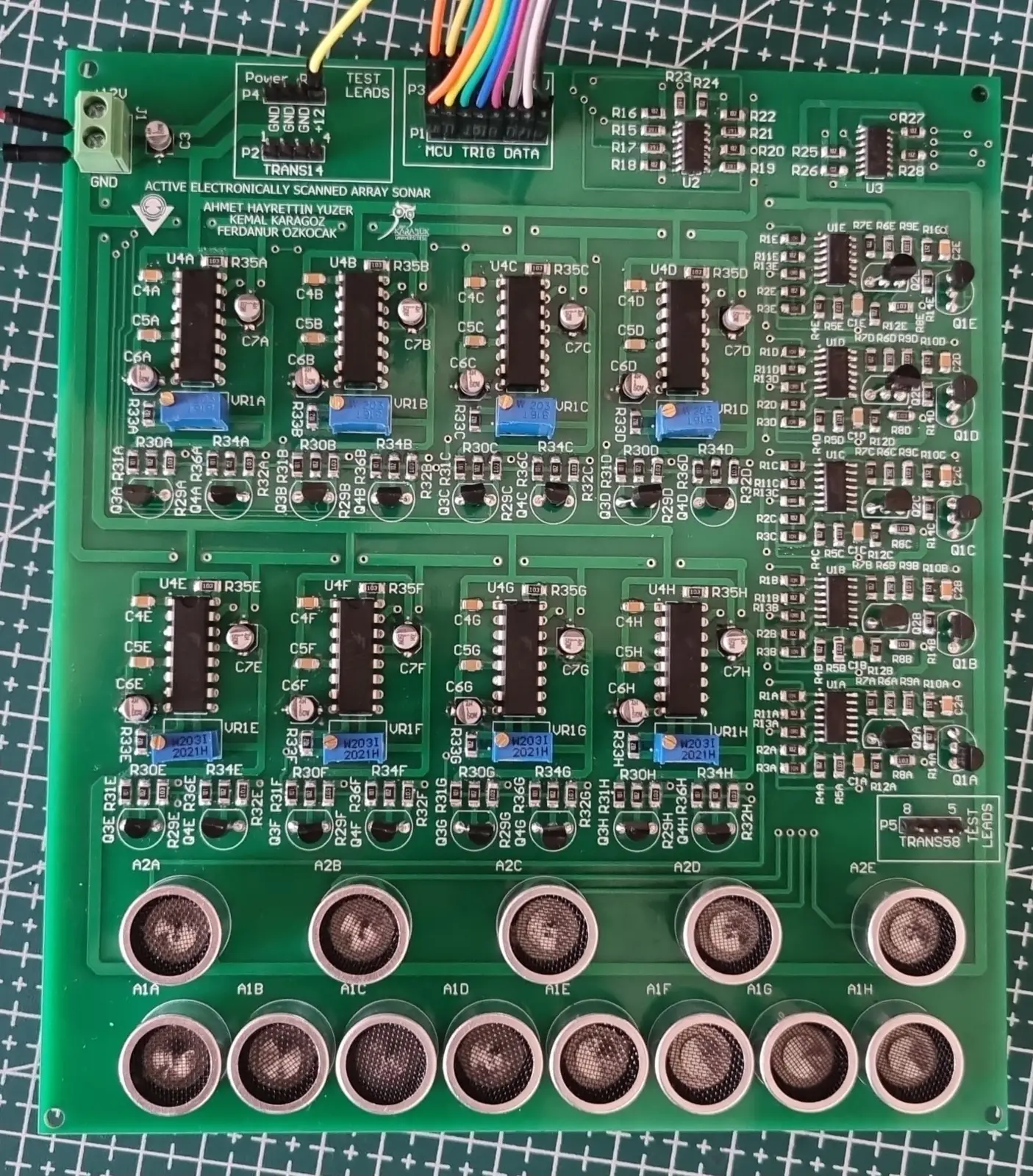
Active Electronically Scanned Array (AESA) Sonar, Experimental sonar prototype exploring electronic scanning with a 40 kHz ultrasonic array, supported by TÜBİTAK 2209-B.
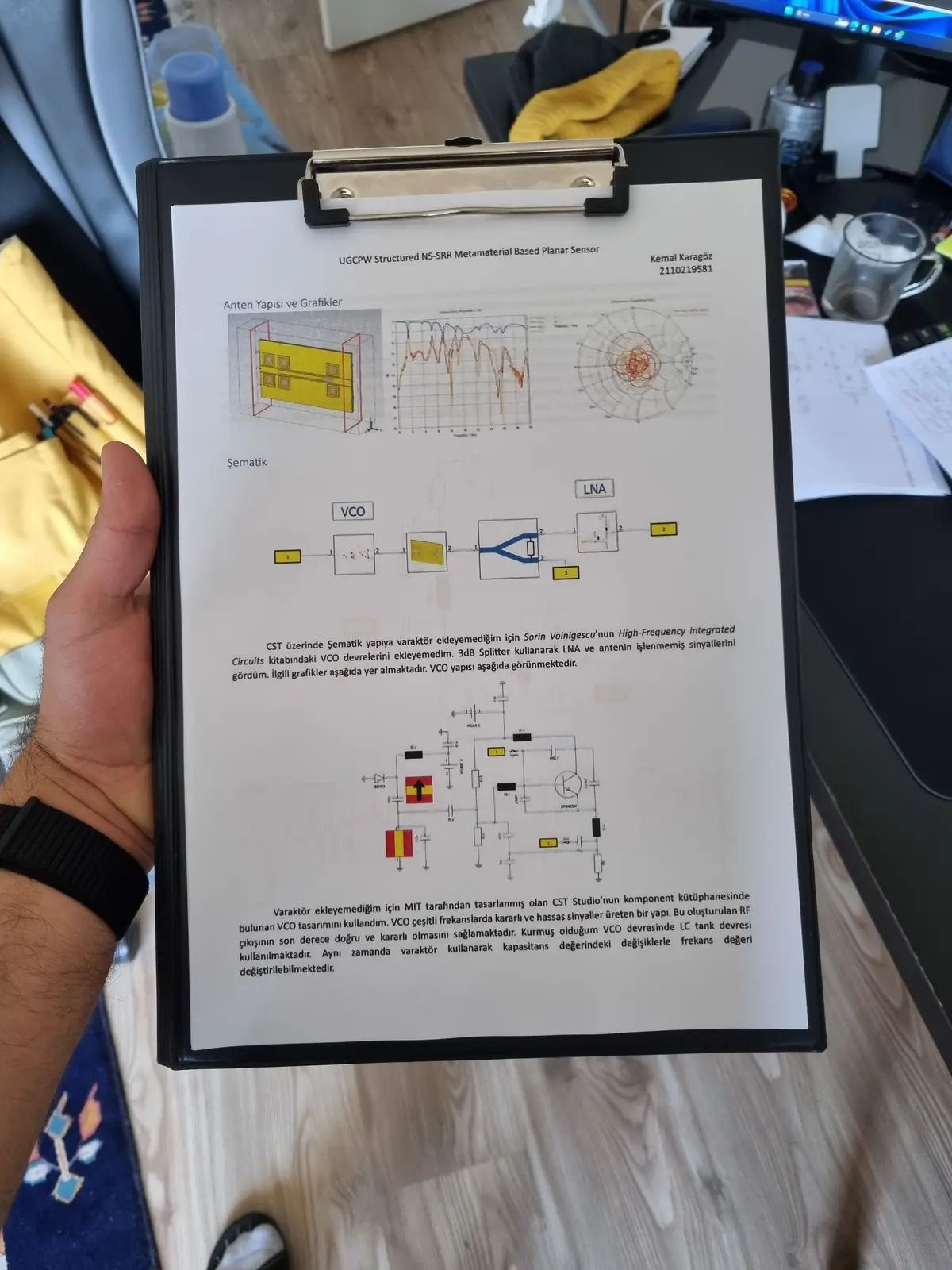
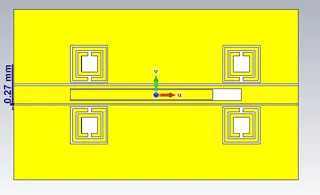
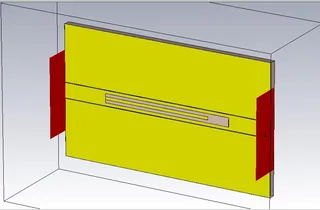
UGCPW Structured NS-SRR Metamaterial Based Planar Sensor, Recreating a published UGCPW/NS-SRR sensor in CST and simulating it with VCO and LNA circuits.
Model Rocket Design and Development with Stochastic Optimization Method, Model rocket development with the Devran Rocket Team using design of experiments, flight simulation and stochastic optimization.
About
I'm an electrical and electronics engineer. Learning about a new technology, understanding how it works, and figuring out how it could meet a real need are some of the things I enjoy most about my work. I like discussing technical questions, sharing what I've learned, and developing solutions with people from different fields.
I've worked in product management, technical solution development, and operational improvement in telecommunications and manufacturing. At Huawei, I contributed to technical discussions and knowledge sharing on 5G core network technologies for the Türk Telekom account. At Grünland Fleisch, I've taken responsibility for digitalization projects covering network and server infrastructure, industrial monitoring systems, and ERP processes.
My background in electronics, communications, and software helps me approach problems from different angles. My technical interests include RF and antenna systems, electronic design, and industrial automation. In my own projects, I'm also involved in defining requirements, developing product concepts, working on development, and coordinating the team.
I enjoy work that combines technical knowledge with close collaboration with customers and colleagues. To me, a good solution is one whose workings people can understand, that works in practice, and that makes their jobs easier.
Projects
10 of 10 projects
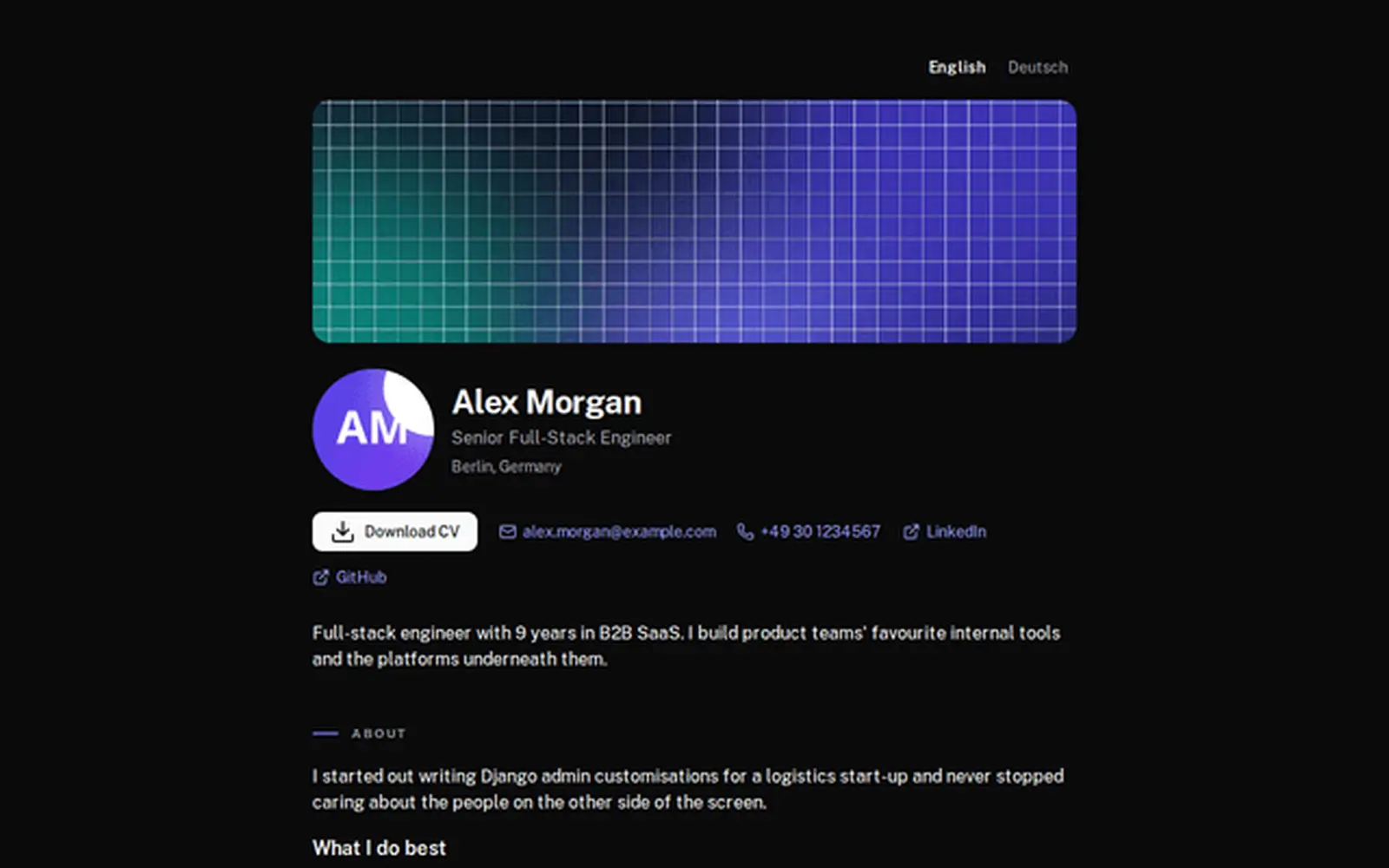
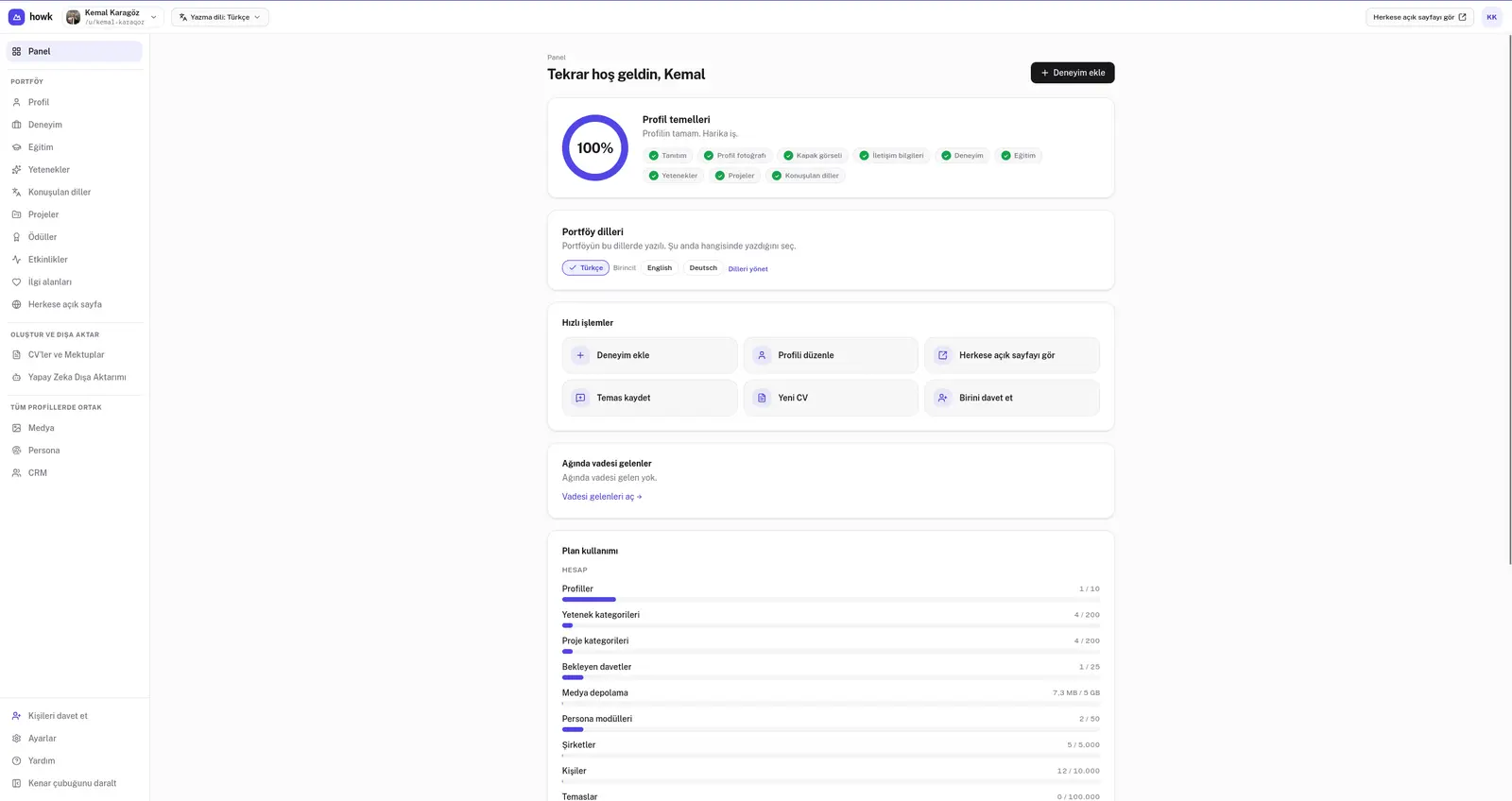
Howk, A platform that brings together your professional story and personal goals.
Founder
Nov 2025 – Present
Web ApplicationsProduct ManagementRequirements AnalysisTechnical Solution DevelopmentSystem ArchitectureI developed howk to help people present their experience for different opportunities and keep their career information up to date over time. My work covered the product concept, user experience, and frontend and backend development.
Full write-up
Users can create multiple professional profiles within a single account, build portfolios in several languages, and preserve versions of CVs and cover letters tailored to their applications. This allows them to present their professional experience in ways that are relevant to different employers and clients.
At the heart of the product, Persona provides a private space for goals, work preferences, and personal priorities. Users can export this information alongside data from their chosen profile and share it with the AI tools they prefer. I designed this feature so that career discussions can take a person’s expectations and life circumstances into account alongside their experience.
Throughout development, I focused on multilingual content management, the separation of public and private information, document versioning, and a mobile-friendly user experience.
Meerkat ERP, ERP used by two companies in Berlin, connecting orders, production, inventory, and batch traceability.
Project Lead and System Architect
Oct 2024 – Present
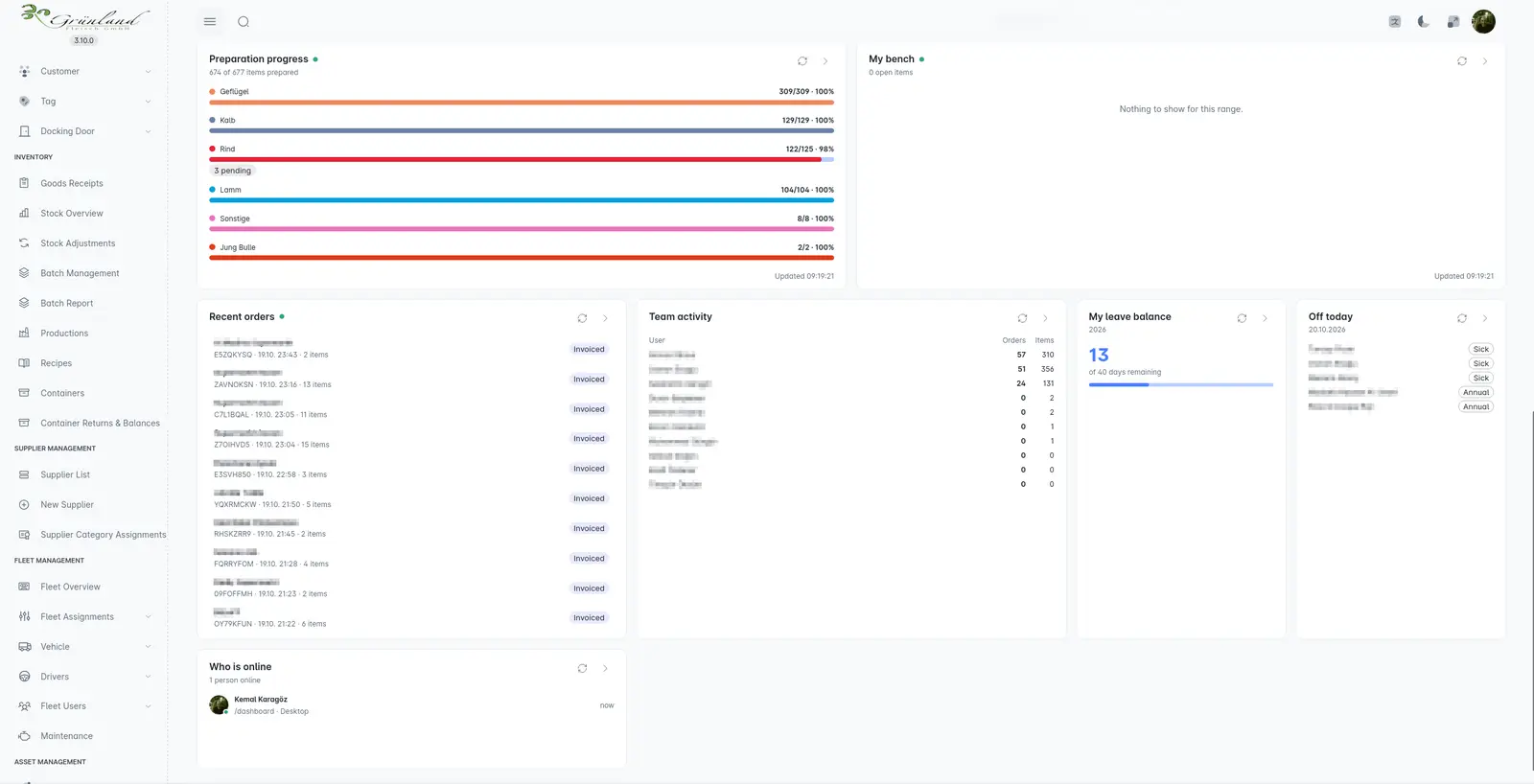
Web ApplicationsProduct ManagementRequirements AnalysisTechnical Solution DevelopmentSystem ArchitectureTechnical Project ManagementTeam CoordinationMeerkat is a web-based ERP system we developed to manage day-to-day operations in meat-processing businesses. Used by two companies in Berlin, it connects order entry, product preparation and labeling, goods receipt, inventory management, production records, and shipping documentation. Management, office, production, and delivery teams use the system every day.
Full write-up
I came up with the idea for Meerkat and led its architectural design and development. My responsibilities included translating business needs into technical requirements, defining workflows and the data model, setting development priorities, and coordinating the team.
One component I took direct technical responsibility for was Print Bridge Agent, which connects the server to label printers on the production floor. Print requests are sent to a local agent via WebSocket. The agent forwards the job to the printer and reports the result to the system. A queue-based fallback takes over when the WebSocket connection is unavailable. Our priority was to print the correct label with low latency, without disrupting production.
Meerkat supports batch traceability from goods receipt through production to customer delivery. Batches consumed and produced during manufacturing are linked, and generated documents are stored with references to their source data. Fleet and personnel management features also allow teams to track their daily operations within the same system.
Active Electronically Scanned Array (AESA) Sonar, Experimental sonar prototype exploring electronic scanning with a 40 kHz ultrasonic array, supported by TÜBİTAK 2209-B.
Project Lead
Sep 2023 – Oct 2024
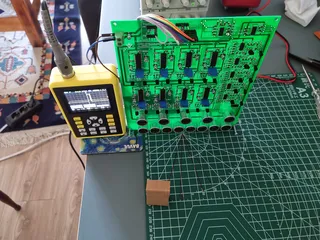
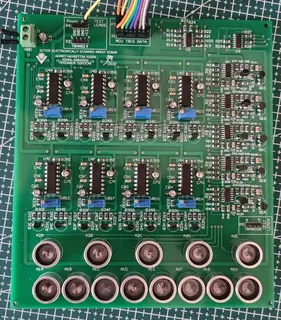
Electronics and Embedded SystemsMathematical ModellingElectronic Circuit and PCB DesignEmbedded Systems DevelopmentMathematical ModelingElectronic Measurement and Fault DiagnosisAltium DesignerLTspiceKiCadESP32PythonAs part of my graduation project at Karabük University, I developed an ultrasonic sonar array prototype with support from the TÜBİTAK 2209-B program. The project investigated electronic scanning without mechanical movement using 40 kHz ultrasonic transducers. The work combined mathematical modeling with laboratory experiments conducted in air.
Full write-up
My role
I was responsible for the project’s mathematical modeling, electronic design, embedded software, prototyping, and experimental testing. I carried out the technical development from transmitter and receiver circuit design through PCB manufacturing preparation, component assembly, software development, and measurements. I continued working on the prototype after graduation until October 2024.
Electronic design and prototyping
On the transmitter side, I worked on signal generation and modulation circuits to drive the ultrasonic transducers. On the receiver side, I designed circuits to amplify, filter, and condition the reflected signal for reading by the microcontroller. I simulated selected parts of the circuitry in LTspice.
Using Altium Designer, I created the schematics and PCB layouts and prepared the manufacturing files and bill of materials. I populated and soldered the manufactured boards. I also designed an additional connection board in KiCad to organize the connections between the main board and the microcontroller.
Mathematical modeling and embedded software
I used Python to study array element placement, beam patterns, and phase and time-delay calculations. I modeled the relationships between transmitter trigger timings to investigate scanning in different directions.
On the ESP32, I developed software for transmitter control, PWM generation, receiver signal acquisition, and distance measurement. I incorporated the phase and delay calculations into the embedded software and carried out beam-steering trials with different transmitter arrangements.
Testing and troubleshooting
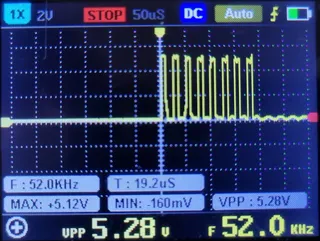
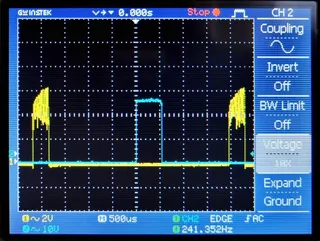
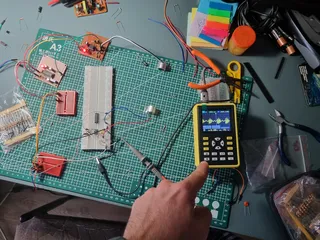
I tested the prototype in stages, covering the power circuitry, signal generation, modulation, and transmitter and receiver circuits. I used an oscilloscope to examine signals at different points in the circuit and compared the observed behavior with the expected results.
At one stage, the receiver signal was visible on the oscilloscope but could not be read by the microcontroller. I investigated the power supply conditions and the software’s execution flow. I tested the transmitting and receiving tasks on separate microcontrollers to investigate the problem and revised the distance-measurement algorithm. I then carried out distance-measurement experiments and scanning trials at different angles using an eight-transmitter arrangement.
Findings and areas for further development
The experiments helped me understand how saturation and thresholding in the receiver circuit affected the preservation and interpretation of weak signals. Limitations in the available measurement equipment restricted direct verification of the phase relationships between channels. I assessed the results within these constraints and treated the work as an experimental prototype.
I now revisit the project in technical blog posts, explaining the methods I used, the problems I encountered, and the design decisions I would approach differently. These reflections also provide a foundation for Sonar V2, which I plan to develop.
Tools and technologies
Altium Designer, LTspice, KiCad, Python, ESP32, Arduino IDE, ultrasonic transducers, analog signal conditioning, PWM, and oscilloscope measurements.
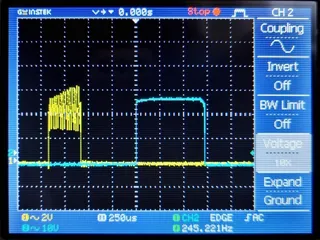
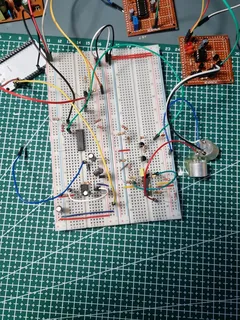
UGCPW Structured NS-SRR Metamaterial Based Planar Sensor, Recreating a published UGCPW/NS-SRR sensor in CST and simulating it with VCO and LNA circuits.
RF Design and Simulation
Jul 2023 – Jan 2024
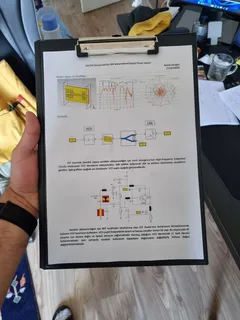
RF and Antenna SystemsCST Studio SuiteRF and Antenna DesignDuring my university studies, I used CST Studio Suite to recreate a UGCPW-structured, NS-SRR metamaterial-based planar sensor presented in a scientific paper. I expanded the work to examine the electromagnetic behavior of the published structure and evaluate the model alongside related RF circuits.
Full write-up
My role
I carried out the modeling, circuit setup, simulations, and reporting independently. Throughout the work, I received technical feedback and guidance from my optoelectronics instructor.
Electromagnetic modeling
I recreated the sensor geometry described in the paper in CST. I examined the frequency response and resonant behavior of the model, which included the UGCPW structure and NS-SRR elements, using the simulation outputs. I incorporated the model into a simulation setup that allowed me to study it together with related RF circuits.
Evaluation with RF circuits
I examined the sensor model within a circuit arrangement containing a voltage-controlled oscillator (VCO), a low-noise amplifier (LNA), and a 3 dB power divider. Using the divider, I observed signals in different circuit branches and evaluated the sensor output alongside the signal obtained through the amplifier.
For the VCO section, I used a circuit model available in the CST library. This allowed me to examine the sensor’s electromagnetic model together with signal generation and amplification functions within the same study.
Scope and experience gained
The project covered electromagnetic and circuit simulations in CST. It did not include physical fabrication or laboratory measurements. I evaluated the results within the conditions of the simulations.
This work gave me experience in translating a published design into a numerical model, setting up simulations, examining RF circuit blocks together, and documenting the results in a technical report.
Tools and technologies
CST Studio Suite, electromagnetic modeling, RF circuit simulation, UGCPW, NS-SRR, VCO, LNA, and power-divider circuits.
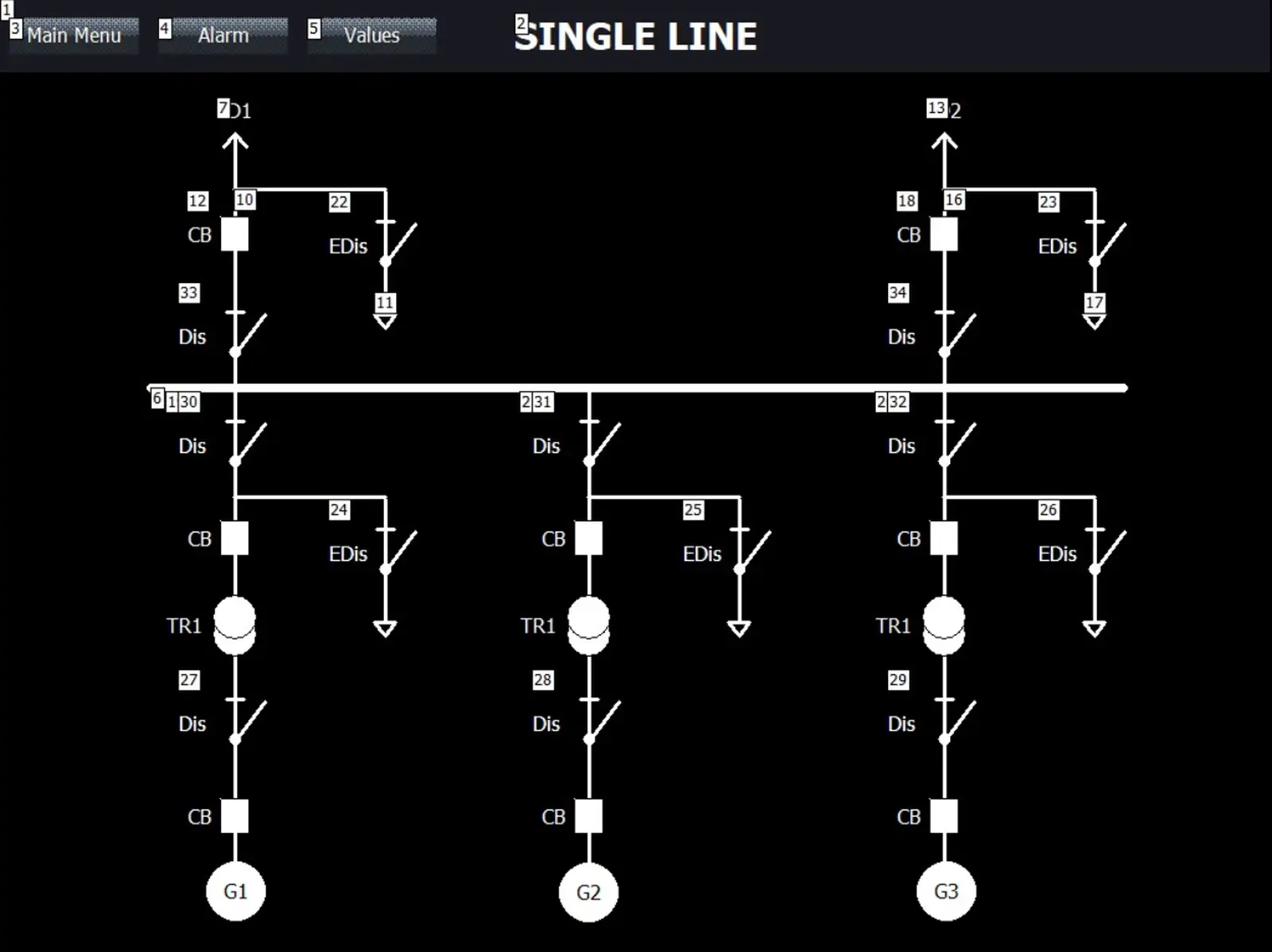
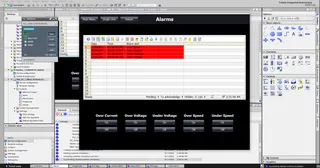
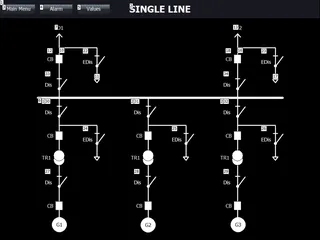
RRHPP - Runoff River Hydro Power Plant PLC & SCADA Industrial Automation, PLC, HMI, and SCADA automation project based on the requirements of an actual run-of-river hydropower plant.
PLC, HMI and SCADA Developer
Feb 2024 – May 2024
Industrial AutomationPLC ProgrammingSiemens TIA PortalSiemens S7-1200HMI DevelopmentSCADALAD (Ladder Diagram)FBD (Function Block Diagram)SCL (Structured Control Language)Requirements AnalysisAs part of the Industrial Automation Systems II course, we developed PLC, HMI, and SCADA applications based on the requirements of an actual hydropower plant project in Kastamonu. Working as a two-person team, we translated the provided requirements into operating scenarios and control logic.
Full write-up
My role
I worked with my project partner on requirements analysis, control scenarios, PLC programming, HMI/SCADA applications, and simulation. We jointly reviewed and developed all parts of the project.
PLC control logic
Using Siemens TIA Portal, we developed control logic in LAD, FBD, and SCL for a CPU 1214C from the S7-1200 family. We structured the plant’s startup, normal operation, and shutdown processes as interconnected control steps.
We defined the prerequisites for starting the turbine and generator, cooling-water checks, and commands associated with excitation and automatic synchronization. We created separate control sequences for normal shutdown, fault-related shutdown, and emergency shutdown.
Auxiliary systems and fault scenarios
Alongside the main generating unit, we included control of auxiliary systems such as drainage pumps, cooling-water pumps, and air compressors. We defined operating conditions based on water level, pressure, speed, and equipment status.
We implemented alarm, operator acknowledgment, and reset logic for electrical and mechanical faults. The control scenarios specified the conditions under which equipment could operate and when it needed to stop.
HMI, SCADA, and simulation
We developed HMI and SCADA applications to monitor process states and pass operator commands to the control system. We linked PLC variables, equipment states, and alarm information to monitoring and control functions.
Through simulation, we evaluated control sequences under different operating conditions. We considered the PLC, HMI, and SCADA components together and worked on the interaction between the control software and operator interfaces.
Experience gained
This project gave me experience in translating a real facility’s requirements into automation software, considering interconnected equipment as a complete system, and developing control scenarios for different operating states. It also gave me practice in developing and reviewing the different parts of a substantial automation project with a teammate.
Tools and technologies
Siemens TIA Portal, Siemens S7-1200 / CPU 1214C, LAD, FBD, SCL, HMI, SCADA, sequential control, alarm logic, and interlocks.
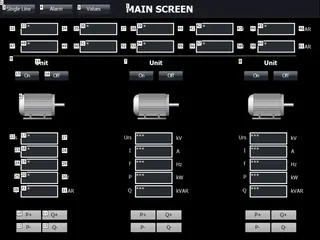
Fascinating Carry Weight, A Valheim mod that increases carrying capacity with skill levels and offers customizable progression.
Mod Designer and Developer
Mar 2023 – Present
Game ModsMathematical ModelingC#Fascinating Carry Weight is a Valheim mod that I designed and developed independently. It links a character’s carrying capacity to their in-game skill levels, allowing them to carry more weight as their skills improve. I handled the gameplay mechanics, software development, configuration options, and publication.
Full write-up
I developed the mod in C#, using BepInEx and Harmony to integrate it with the Unity-based game. The system calculates the contribution of each skill and adds the combined bonus to the game’s existing carrying capacity calculation.
I created configuration options that let players enable or disable individual skills and adjust how much each one contributes to carrying capacity. This allows them to tailor the system to their preferred playstyle. Initially focused on running, jumping, and swimming, the mod was expanded to include other skills, taking user requests into account.
As part of my work on the next version, I developed six progression profiles that use different mathematical curves to define the relationship between skill level and carrying capacity. These calculations allow the rate of progression to vary across skill levels. A seed stored in the configuration makes the variations reproducible under the same settings.
For this version, I also developed additions to the skill screen that display each skill’s contribution to carrying capacity, the total bonus, and the selected progression profile. The aim is to help players see how their character’s development affects carrying capacity directly within the game.
I published the mod on Nexus Mods and Thunderstore in 2023. It has received more than 20,000 downloads across the two platforms. I have used player feedback to improve its features and configuration options, and I continue to develop the project.
NLP-Based Turkish Song Lyric Synthesizing, Data collection, LSTM model training and a Python desktop application for generating Turkish song lyrics.
NLP and Deep Learning Developer
Jun 2022 – Feb 2023
Data AnalysisMachine LearningC#PythonData Collection and PreparationWeb ScrapingMachine LearningNatural Language Processing (NLP)PandasTensorFlow / KerasThe idea for this project came from a word-and-song game I played with friends. One person would say a word, and the others would try to find a song containing it. Someone would then choose another word from that song, and the game would continue. To find songs faster, I collected song lyrics and built an Android application that could search them by keyword.
Full write-up
This led me to experiment with generating new lyrics using the data I had collected. I developed an experimental natural language processing project aimed at learning from Turkish song lyrics and continuing a starting text supplied by the user. I independently handled data collection, training data preparation, model development, the desktop interface and all supporting tools.
For data collection, I created a Python web scraping notebook on Kaggle. Using Requests and BeautifulSoup, I collected song links, titles and lyrics. I stored the links in a CSV file and the song records in JSON format. I applied basic whitespace and line cleaning, then used langdetect to classify the records by language: Turkish, English, German or other languages. I also implemented multithreading for the data collection process.
To simplify training data preparation, I developed a supporting application in C# using Windows Forms. The tool allowed song records to be viewed, descriptions or starting texts to be added manually, and the edited data to be saved as JSON. I also wrote Python scripts to convert these records into a training text file and remove selected expressions.
For the model, I used TensorFlow and Keras to build a neural network consisting of an embedding layer, a bidirectional LSTM layer and a softmax output layer. Preprocessing included converting text to lowercase, tokenizing words into numerical sequences and padding sequences to a common length. I created training examples for predicting the next word from the preceding words. I also developed the training and text generation workflows, including saving and reloading the model and its vocabulary mappings.
Using Python and PyQt5, I built a desktop application where users could enter a starting text, generate a continuation with the model and view the result in the interface. This brought the data preparation and model development work together in an application that users could try themselves.
During testing, the model produced some meaningful phrases but could not consistently maintain coherence throughout the generated text. Limited hardware resources also restricted training and experimentation with different configurations. The project remained an experimental prototype and gave me practical experience across the development of a text generation application, from data preparation and model training to interface development.
Web Scraping and Cleansing Turkish University Engineering Data, University comparisons for transfer decisions using YÖK Atlas data, statistical analysis and machine learning.
Data Analysis and Machine Learning
Aug 2021 – Dec 2021
Data AnalysisMachine LearningPythonData AnalysisData Collection and PreparationWeb ScrapingMachine LearningPandasWhile considering a university transfer, I carried out an independent data collection and analysis project to identify the university that best suited my needs. I brought together information on electrical and electronics engineering programmes to compare universities across several indicators. I handled all data collection, preparation, statistical analysis and modelling myself.
Full write-up
Using Python, Requests, BeautifulSoup and Pandas, I collected programme information from YÖK Atlas. I extracted details embedded in programme names, such as the language of instruction, evening study options, scholarships and distance learning, into separate fields. I also recorded each programme’s link and identifier to create a base table for collecting more detailed data.
By accessing the data endpoints behind YÖK Atlas’s dynamically loaded tables, I collected figures on current students, graduates, new admissions, the entrance exam score of the last admitted student and academic staff numbers. I combined information from different tables by programme to create a consistent dataset for comparison and analysis.
During data preparation, I cleaned programme names, converted numerical values stored as text into appropriate data types and handled differences in decimal separators. I defined rules for handling missing or empty fields. I saved the resulting tables in CSV and Pickle formats so they could be reused in subsequent analyses.
I performed statistical analyses and trained small-scale machine learning models using the collected data. I incorporated my own data into the evaluation, applied weightings and compared universities according to my personal needs. This work supported my decision to transfer from the Department of Electrical and Electronics Engineering at İzmir Kâtip Çelebi University to the same department at Karabük University. I subsequently completed the transfer and continued my studies there.
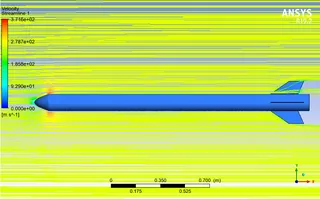
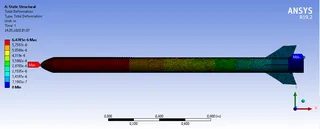
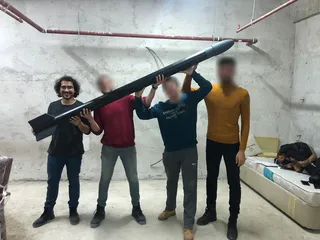
Model Rocket Design and Development with Stochastic Optimization Method, Model rocket development with the Devran Rocket Team using design of experiments, flight simulation and stochastic optimization.
Project Lead and Avionics Lead
Jan 2019 – Apr 2020
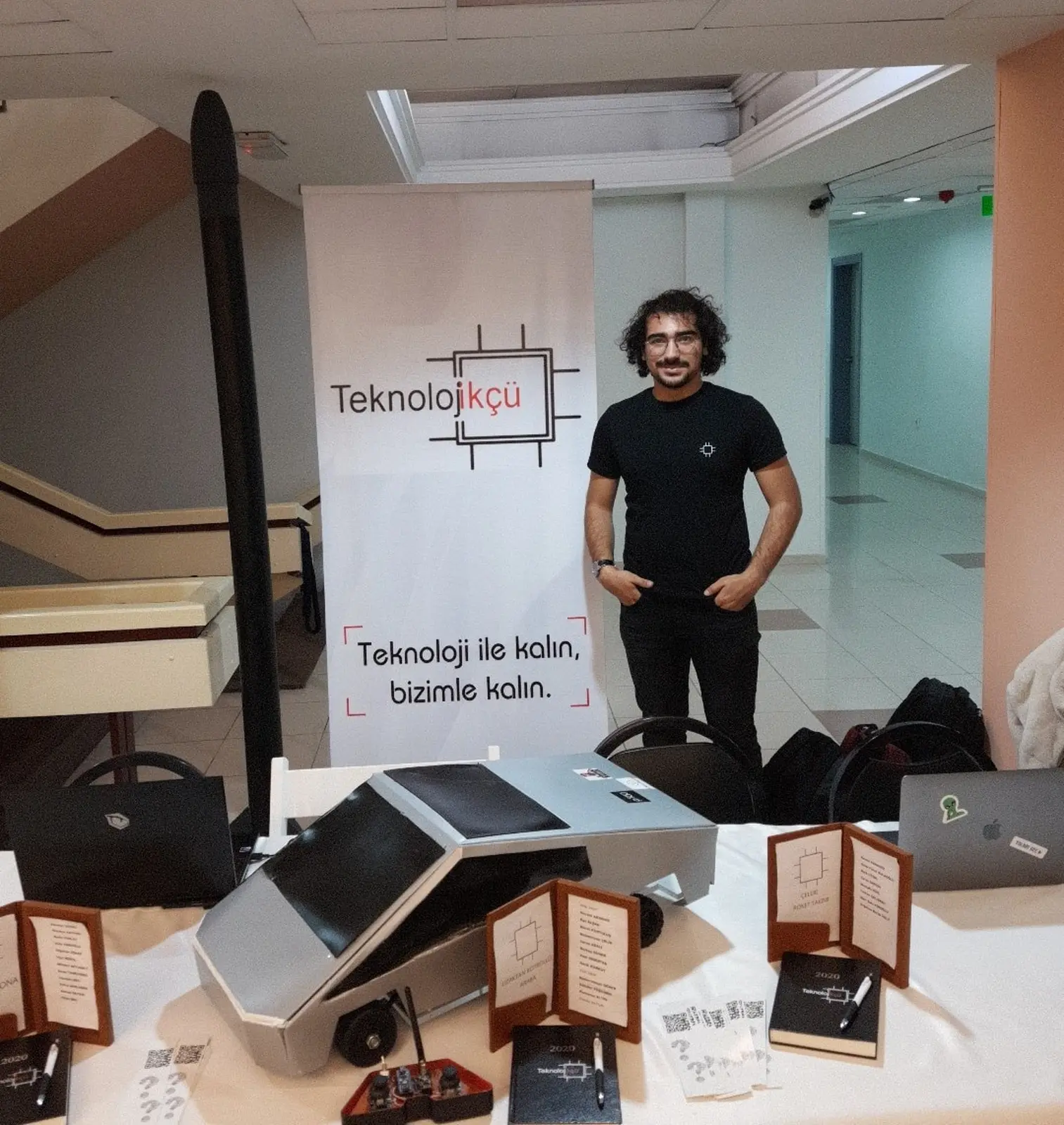
Electronics and Embedded SystemsRocket and Avionics SystemsMathematical ModellingElectronic Circuit and PCB DesignMathematical ModelingCTechnical Project ManagementAltium DesignerDesign of Experiments (DoE)Wolfram MathematicaOpenRocketC++C#Team CoordinationInterdisciplinary CollaborationAt İzmir Kâtip Çelebi University, I founded the Devran Rocket Team and led a model rocket development project for the TEKNOFEST Rocket Competition. I initiated the project and was responsible for project management and avionics. I also contributed directly to the mathematical modelling, simulation and optimization work.
Full write-up
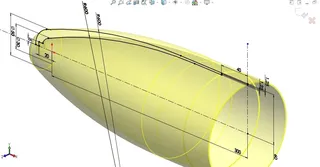
Our aim was to examine how the rocket’s geometry affected its flight performance and identify suitable designs under defined environmental conditions and design constraints. We combined design of experiments (DoE), flight simulation and stochastic optimization to compare different designs systematically.
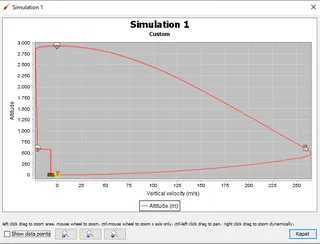
As part of the study, 505 design scenarios generated using DoE were simulated in OpenRocket. MacroRecorder was used to automate repetitive data entry and simulation tasks. The resulting flight performance data was recorded alongside the design variables and formed the basis for the mathematical modelling work.
Using Wolfram Mathematica, we developed nonlinear regression models to represent the relationships between design variables and flight outputs. The models’ predictive performance was evaluated by splitting the data into training and test sets. These models were then used in stochastic optimization studies based on the defined objectives and constraints.
For the avionics system, we designed our own electronic board as a team using Altium. The system included STM-based hardware, a Raspberry Pi, a six-axis motion sensor and a pressure sensor. We also developed a ground station application in C# and used it to receive data from the system. As the avionics lead, I was actively involved in the work on the board design, sensors and ground station software.
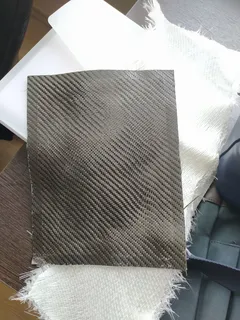
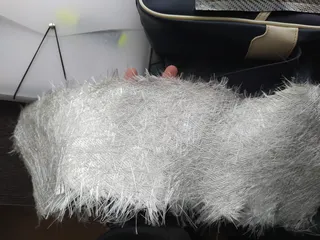
We also worked on the physical production of the rocket, which we built with sponsorship support from Şişecam. However, we were unable to carry out flight tests. Our assessments of flight performance therefore remained based on simulation and mathematical modelling results.
This project gave me experience in managing a development process from building a multidisciplinary student team through to design, analysis and physical production. It also gave me practical experience in coordinating electronics, software and mechanical work, using simulation results to inform design decisions, and maintaining technical coordination within the team.
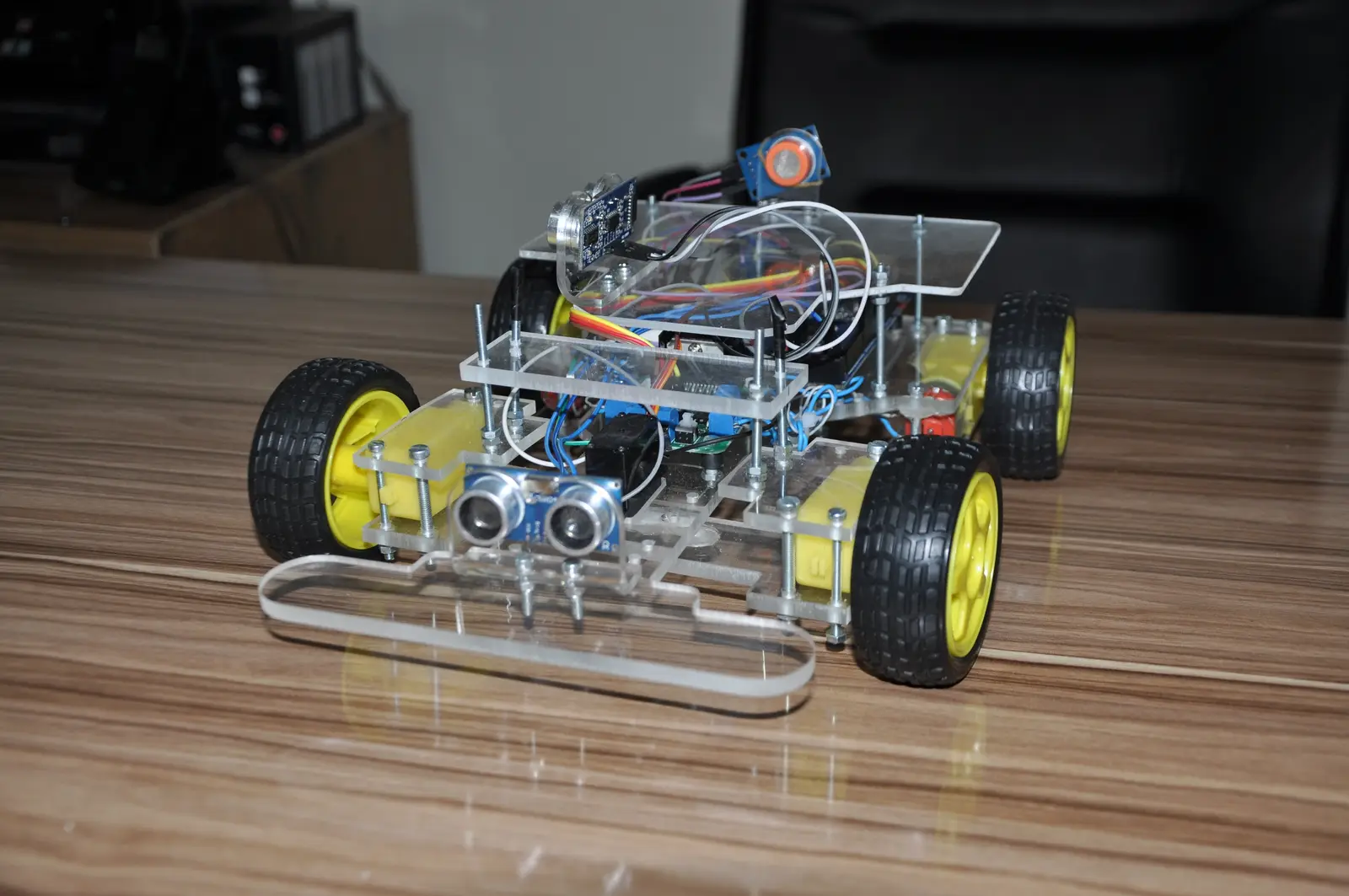
Development of Systems to Prevent Driving Under the Influence of Alcohol, Experimental model vehicle combining alcohol detection, image processing and a Bluetooth-connected mobile app.
Project Creator and Developer
Jan 2017 – Sep 2018
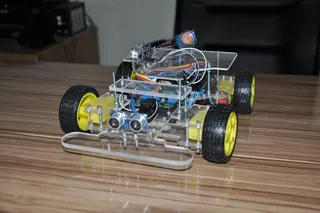
Electronics and Embedded SystemsEmbedded Systems DevelopmentCTechnical Solution DevelopmentArduino3D CAD ModelingC++While in high school, I independently developed a model vehicle project to demonstrate scenarios for preventing driving under the influence of alcohol. I handled the mechanical design, integration of electronic components, control software, computer interface and mobile application myself.
Full write-up
I created the 3D design for a model vehicle approximately 35–40 cm long. I had the parts cut from acrylic, assembled the vehicle body and built an Arduino-based control system. By placing several alcohol sensors in different parts of the vehicle, I investigated where alcohol was detected. This arrangement allowed me to experiment with distinguishing alcohol originating from the driver’s area.
I used a distance sensor and a camera to detect the model vehicle’s surroundings. Image processing ran on a computer: I transferred the camera feed to a graphical interface I developed in Visual Studio and applied basic image processing operations. This was a simple, experimental approach to environmental perception developed as part of a high school project.
I implemented two main scenarios in the control software. When alcohol was detected while the vehicle was stationary, the system prevented it from moving. When alcohol was detected while it was moving, the vehicle pulled over to a suitable area on the right and a message was sent to close contacts. I successfully demonstrated movement prevention, pulling over and message delivery in tests with the model vehicle.
For the mobile component, I developed a phone application using MIT App Inventor and established Bluetooth communication between the application and the vehicle. This brought sensor-based detection, vehicle control, computer-based image processing and mobile communication together in a single prototype.
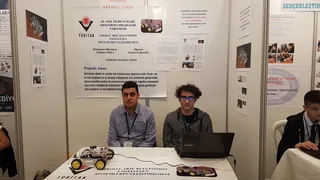
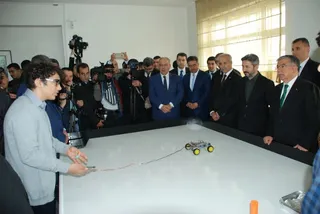
With this project, I won first place in physics in the Malatya regional round of the 2017 TÜBİTAK High School Students Research Projects Competition. I qualified for the national finals, where I received an Encouragement Award in physics.












Experience

Technology and Operations Lead, Grünland Fleisch GmbH
Berlin, Germany
May 2025 – Present 1 year 6 months
I work on digitalizing production and distribution processes, developing technical infrastructure, and improving day-to-day operations. I translate business needs into technical requirements and take responsibility for designing and implementing software, communications, and automation solutions.
Tasks & achievements: Technology and Operations Lead
- Product preparation time: Reduced the time required for the same employee to prepare 300 product units from approximately 10 hours to 6 hours through the systems I implemented, achieving a 40% reduction in preparation time.
- Business impact: Contributed to a 22% increase in the company’s annual revenue in 2025 compared with 2024—an increase of €24 million—through technical and operational improvements.
- Solution development and system architecture: Translated business needs into technical requirements and led the architectural design and development coordination of Meerkat ERP. Took direct technical responsibility for components requiring engineering expertise, including integrations with production equipment and label-printing infrastructure.
- Wireless communications: Evaluated and improved the Wi-Fi infrastructure through field testing and RF simulations in a production environment where cold-room insulation and metal structures created wireless connectivity challenges.
- Electronics and monitoring systems: Designed and deployed custom electronic boards and industrial IoT sensor solutions for environmental monitoring and facility automation.
- Industrial automation: Programmed and enhanced PLC and SCADA applications for controlling and monitoring refrigeration systems.
- IT infrastructure: Modernized the IT infrastructure through server migrations, system virtualization, and the implementation of a FreePBX/Asterisk-based telephony system.

Product Manager - 5G Core Network, Huawei Enterprise
Istanbul, Turkiye
Jan 2025 – May 2025 5 months
I worked on 5G core network products for the Türk Telekom account. My responsibilities included explaining customer-specific network architectures developed by solution teams, helping clarify technical questions, and evaluating product capabilities against customer requirements.
Tasks & achievements: Product Manager - 5G Core Network
- Customer-specific solution presentations: Explained core network architectures and technical solutions developed by solution teams for Türk Telekom sites during online customer meetings, covering their operating principles and how they addressed customer requirements.
- Technical customer discussions: Helped clarify customer questions during face-to-face meetings on topics such as network slicing and the network/service names displayed on mobile phones.
- Network transition scenarios: Explained technical aspects of maintaining existing 4G LTE and 3G services alongside planned 5G NSA/SA deployments during customer discussions.
- Internal knowledge sharing: Shared knowledge of 5G core network architecture and operating principles with product managers, providing technical explanations and additional context during meetings.
- Evaluation of solution options: Evaluated Huawei product capabilities and potential applications for different requirements in positioning and deep packet inspection (DPI) during technical discussions.

Solar Energy Systems Engineering Intern, New Shine Energy
Izmir, Turkiye
Jul 2023 – Sep 2023 3 months
I returned to the company where I had previously worked to complete my engineering internship, continuing my involvement in fieldwork and technical implementation. I worked on grid-connected and off-grid solar energy systems ranging from 5 to 200 kW.
Tasks & achievements: Solar Energy Systems Engineering Intern
- Fieldwork: Participated in site surveys and panel layout planning for solar energy projects.
- Configuration and troubleshooting: Configured inverters and worked on diagnosing and resolving battery- and configuration-related issues.
- Electronic measurements and repair: Used multimeters, clamp meters, and oscilloscopes for fault diagnosis, and performed electronic board repairs on inverter models whose circuit designs I was familiar with.
Technical Project and Operations Coordinator, New Shine Energy
İzmir, Turkiye
Sep 2018 – Feb 2022 3 years 6 months
Alongside my university studies, I worked year-round on the company’s technical and operational activities. I took an active role in customer meetings, proposal preparation, site surveys, technical implementation, project coordination, and handover processes for solar energy projects.
Tasks & achievements: Technical Project and Operations Coordinator
- Customer requirements and proposals: Met with customers to assess their solar energy system requirements and prepared project proposals.
- Site surveys and planning: Conducted site surveys and planned panel layouts for grid-connected and off-grid solar energy projects.
- Inverter configuration: Configured inverters before commissioning and diagnosed and resolved configuration-related operating issues.
- Electrical measurements and fault diagnosis: Investigated battery- and inverter-related issues using multimeters and clamp meters, and performed measurements with oscilloscopes to examine electronic boards.
- Electronic board repair: Performed board-level repairs on inverter models whose circuit designs I was familiar with. Diagnosed and resolved faults involving power electronics components such as MOSFETs and IGBTs.
- Project coordination and handover: Actively participated in project coordination, hands-on site work, and solar installation handovers, while helping coordinate day-to-day activities within a small team.
Education

Karabük Üniversitesi, Bachelor’s Degree, Electrical and Electronics Engineering
Faculty of Engineering
2022 – 2024
During my undergraduate studies, I worked on electronic design, antenna and RF systems, electromagnetic simulation, and ultrasonic sensing. For my graduation project, I took responsibility for the technical development of a sonar array prototype, covering mathematical modeling, circuit and PCB design, embedded software, and experimental testing. I used CST Studio Suite to design and simulate antennas, metamaterial-based sensors, and related circuits.
Highlights
- Graduation project: Developed an experimental prototype using 40 kHz ultrasonic transducers to investigate electronic scanning as part of the TÜBİTAK 2209-B-supported “Active Electronically Scanned Array Sonar” project. Undertook the project’s technical design, implementation, and testing.
- Electronics and embedded systems development: Created schematics and PCB layouts for transmitter and receiver circuits using Altium Designer, assembled the electronic components on the boards, and developed control and distance-measurement software for the ESP32.
- Mathematical modeling and experiments: Used Python to investigate array element spacing, radiation patterns, and phase and time-delay calculations. Conducted oscilloscope measurements, distance-measurement experiments, and beam-steering trials on the prototype.
- Antenna and RF design: Designed, analyzed, and simulated patch and other microstrip antennas, along with related circuits, using CST Studio Suite.
- Metamaterial-based sensor research: Worked on a UGCPW-structured, NS-SRR metamaterial-based planar sensor, modeling and simulating the sensor structure and associated RF circuits in CST.

İzmir Kâtip Çelebi Üniversitesi, Undergraduate studies — transferred to Karabük University, Electrical and Electronics Engineering
Faculty of Engineering and Architecture
2018 – 2022
During my undergraduate studies in Electrical and Electronics Engineering, I took an active role in initiating student engineering projects, forming teams, and coordinating technical work. I worked on rocket and avionics systems, mathematical modeling, simulation, and optimization. In February 2022, I transferred to Karabük University to continue my undergraduate studies.
Highlights
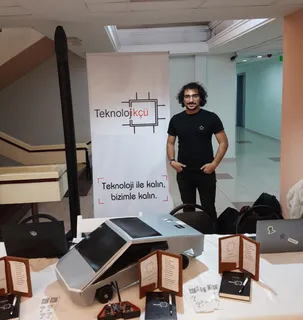
- Led the establishment of the student Technology Society (Teknoloji Topluluğu). As Technology Coordinator, I initiated six projects—rocketry, EEG, the EFE electric vehicle, a robotic arm, a drone, and a humanoid robot—and coordinated project activities.
- Founded the Devran and Feanor rocket teams. Initiated the Devran project and assumed responsibility for project leadership and avionics activities.
- Contributed to mathematical modeling, Design of Experiments (DoE), simulation, and stochastic optimization for rocket design within the Devran project, using Wolfram Mathematica.
- Built a physical rocket together with the Devran team, supported by sponsorship from Şişecam.
- Reviewed technical work, planned subsequent steps, and allocated tasks for the EFE electric vehicle project and other student projects. Coordinated with academic staff and laboratories and assigned new student members to suitable projects and teams.
Skills
- Electronics and Embedded Systems
- Electronic Circuit and PCB Design
- Embedded Systems Development
- Electronic Measurement and Fault Diagnosis
- Inverter Configuration and Repair
- Altium Designer
- LTspice
- KiCad
- ESP32
- Arduino
- STM32
- Telecommunications and RF
- CST Studio Suite (Intermediate)
- 5G Core Networks
- Network Slicing
- RF and Antenna Design
- Office and Productivity Tools
- Microsoft Office Suite (Expert)
- Modeling and Simulation
- Mathematical Modeling
- Design of Experiments (DoE)
- Wolfram Mathematica
- OpenRocket
- SOLIDWORKS
- Ansys (Elementary)
- 3D CAD Modeling
- Technical Drawing
- Industrial Automation
- PLC Programming (Advanced)
- Siemens TIA Portal (Advanced)
- Siemens S7-1200 (Advanced)
- HMI Development (Advanced)
- SCADA (Advanced)
- LAD (Ladder Diagram) (Advanced)
- FBD (Function Block Diagram) (Intermediate)
- SCL (Structured Control Language) (Intermediate)
- Software and Data Analysis
- C
- C++
- C# (Intermediate)
- Python
- Data Analysis
- Data Collection and Preparation
- Web Scraping
- Machine Learning
- Natural Language Processing (NLP)
- Pandas
- TensorFlow / Keras
- Product and Project Management
- Product Management
- Requirements Analysis
- Technical Solution Development
- System Architecture
- Technical Project Management
- IT and Network Infrastructure
- Network Infrastructure Management
- Wi-Fi Planning and Optimization
- Server Virtualization
- VoIP Telephony Systems
- FreePBX / Asterisk
- Linux Server Administration
- Proxmox VE
- Docker
- VPN Configuration
- WireGuard
- Tailscale
- Technical Communication and Collaboration
- Quick Learning
- Technical Communication and Knowledge Sharing
- Team Coordination
- Interdisciplinary Collaboration
Languages
- EnglishC1 — Advanced
- GermanB1 — Intermediate
- TurkishNative
Awards
National Finals Encouragement Award in Physics – High School Students Research Projects Competition, TÜBİTAK
May 2017
I received an Encouragement Award in Physics at the national finals of TÜBİTAK’s 2017 High School Students Research Projects Competition for my project, “Development of Systems to Prevent Driving Under the Influence of Alcohol.” I qualified for the finals after winning first prize in the Malatya regional round.
I developed the project independently while in high school, combining multiple alcohol sensors, basic image processing, and a Bluetooth-connected mobile app in an Arduino-based model vehicle. On the working prototype, I implemented scenarios that prevented the vehicle from moving when alcohol was detected or, if it was already in motion, directed it to a suitable stopping area and sent a notification to relatives.
Regional First Prize in Physics – High School Students Research Projects Competition, TÜBİTAK
Mar 2017
I won first prize in physics at the Malatya regional round of TÜBİTAK’s High School Students Research Projects Competition in 2017 with “Development of Systems to Prevent Driving Under the Influence of Alcohol,” a project I developed independently while in high school.
I combined alcohol detection, basic image processing, and a Bluetooth-connected mobile app in an Arduino-based model vehicle. On the working prototype, I implemented scenarios that prevented the vehicle from moving when alcohol was detected or, if it was already in motion, directed it to a suitable stopping area and sent a notification to relatives. Winning the regional competition qualified me for the national finals.
Interests
Violin
I enjoy playing classical music on the violin and am working on my technique to explore pieces from different periods.
Reading and Research
Reading and looking into topics that interest me are part of my everyday life.
Exploring History and Nature
Details
- Driving licences
- B - Germany, B - Turkiye
- Personality type
- ENTJ-A